

GFCIs and water: what CPSC says
What a GFCI is, where CPSC points to water, and when to test one.
Disclosure: We may earn a commission if you buy through links on this page. It does not change our guidance. Affiliate Disclosure
What a GFCI is
CPSC says a ground fault circuit interrupter, called a GFCI or GFI, is an electrical device that can be installed in your electrical system or built into a power cord. CPSC says the GFCI "is designed to protect people from severe or fatal electric shocks."
Where CPSC points to water
CPSC says ground fault protection is used "especially for circuit outlets in particularly vulnerable areas such as where electrical equipment is near water."
What a ground fault is
CPSC says a ground fault is "an unintentional electrical path between a power source and a grounded surface."
Portable GFCIs
CPSC says portable GFCIs are also available "to provide on-the-spot ground fault protection even if a GFCI is not installed on the circuit." CPSC says one type of portable GFCI is "an extension cord combined with a GFCI."
When to test
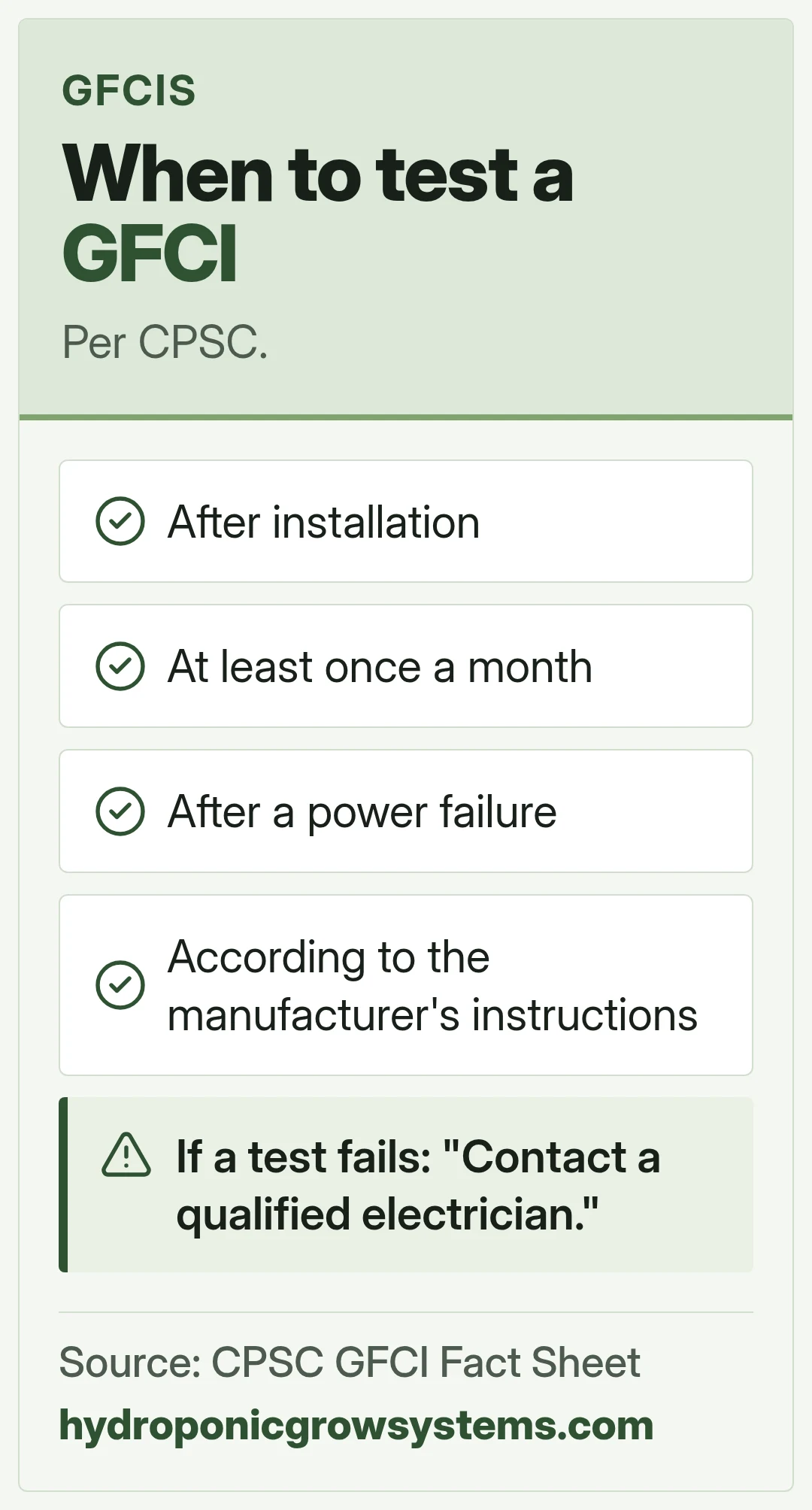
CPSC says to test every GFCI "After installation," "At least once a month," "After a power failure," and "According to the manufacturer's instructions." If a test fails, CPSC says to "Contact a qualified electrician."
Installing and wiring
We do not give wiring or installation steps. CPSC says: "When in doubt about the proper procedure, contact a qualified electrician; do not attempt to install it yourself." Use a qualified electrician for any wiring.
This is general information, not legal, electrical, or safety advice.
Sources: CPSC, GFCI Fact Sheet (Pub. 099).
FAQ
General information only. Water and electricity are a dangerous mix: keep plugs, cords, and connections away from water and follow every maker's instructions. CPSC says a GFCI "is designed to protect people from severe or fatal electric shocks" and to test every GFCI "At least once a month." Use a qualified electrician for any wiring. Keep nutrients and other chemicals away from children and pets. In an emergency, call 911.



Next: pumps and air stones
Two kinds of pump.
