

Air pumps, water pumps, and air stones
What each pump does in a system, and where its cord and plug go.
Disclosure: We may earn a commission if you buy through links on this page. It does not change our guidance. Affiliate Disclosure
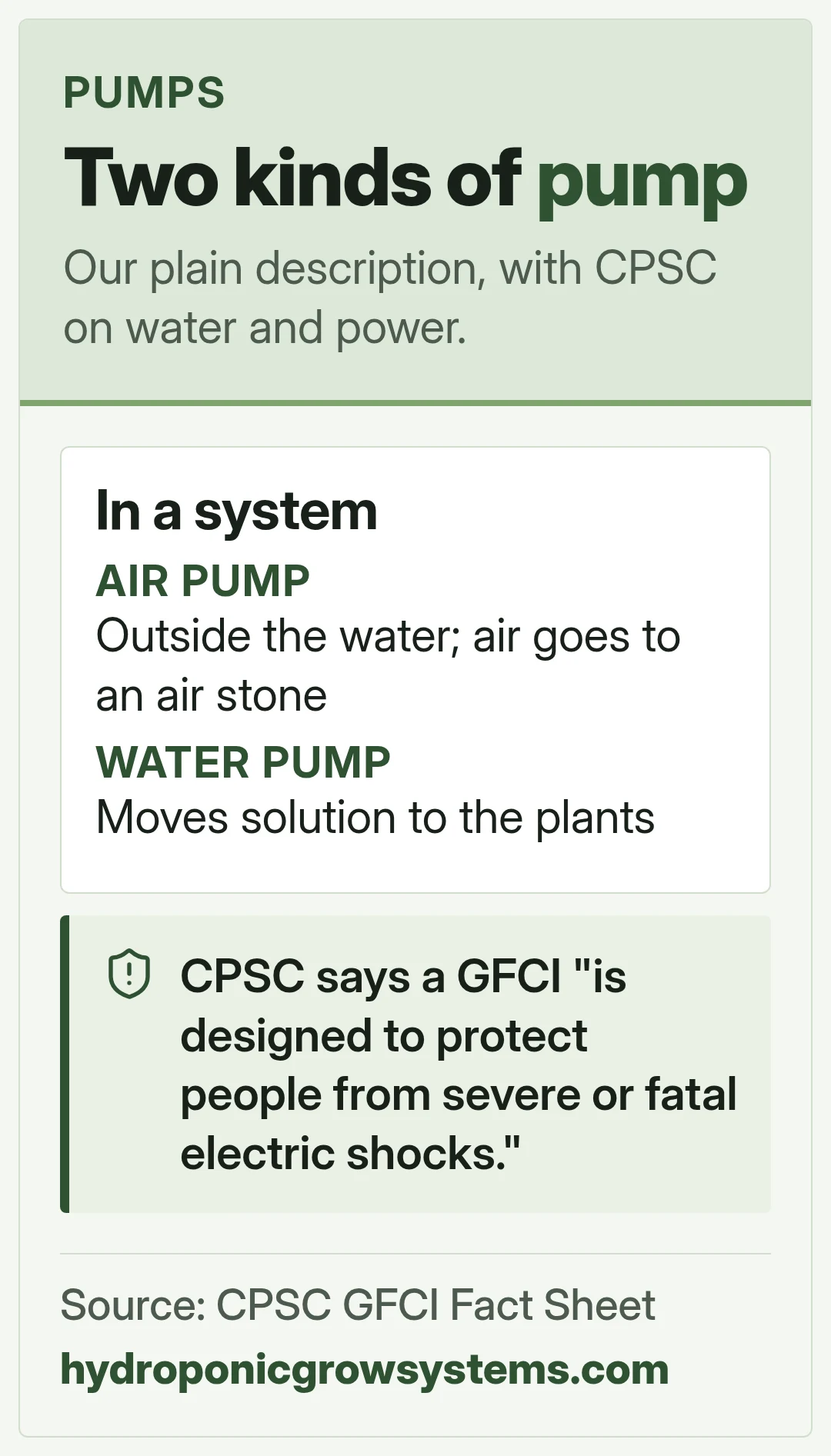
Two kinds of pump
An air pump pushes air through tubing to an air stone that bubbles in the reservoir. A water pump sits in or beside the reservoir and moves nutrient solution to the plants. Which one a system uses depends on its type.
Where the cords go
A water pump that sits in the reservoir has a cord that leaves the water. Keep plugs, cords, and connections away from water, and follow every maker's instructions.
GFCIs
CPSC says a GFCI "is designed to protect people from severe or fatal electric shocks," and that ground fault protection is used "especially for circuit outlets in particularly vulnerable areas such as where electrical equipment is near water." Use a qualified electrician for any wiring.
Cleaning a pump
The maker's instructions say how to clean a pump and an air stone, and how to disconnect them first.
What we do not say
We do not rate pumps, give flow rates, or say a pump suits a system.
This is general information, not legal, electrical, or safety advice.
Sources: CPSC, GFCI Fact Sheet (Pub. 099).
FAQ
General information only. Water and electricity are a dangerous mix: keep plugs, cords, and connections away from water and follow every maker's instructions. CPSC says a GFCI "is designed to protect people from severe or fatal electric shocks" and to test every GFCI "At least once a month." Use a qualified electrician for any wiring. Keep nutrients and other chemicals away from children and pets. In an emergency, call 911.



Next: deep water culture
Roots hang in the solution.
